Below is the text of an essay I wrote in 2018 for Contexts (Volume 17 No 2 pages 13-15). I’d forgotten about it until I came across it today. This was written in the first Trump administration before the fall 2018 midterm elections, before COVID and George Floyd, before Biden won in 2020, before January 6, 2021, before Trump’s second victory in 2024. As you will see, it does not offer a prescription for success and those who oppose the Trump administration in 2025 view the situation as even more dire. But I’m struck that the general picture I portrayed still seems to have some relevance.
A social movement field is like a game with dozens of teams playing simultaneously—and nobody’s in charge. The rules shift unpredictably, even as the teams try to strategize and anticipate others’ moves.
The game we’re playing in the U.S. today includes two large alliances centered around each of the major political parties. Each includes both strong partisans, whose main allegiance is to the party, and issue-specific social movements. There are ideological disagreements, bitter in-fighting, and jockeying for position within each alliance. The Republican alliance has gained control of the federal government and most state governments, but the Democratic alliance was recently in power and still has substantial power in some regions. Most White people (about 55-60%) support the Republican alliance, while a very large majority of racial/ethnic minority people support the Democrats. The racial divide is largely due to the Republicans’ Southern Strategy of making White identity appeals. Overt White nationalists are part of the Republican alliance, while minority movements are part of the Democratic alliance. Democrats are divided along a Clinton-Sanders division, and the Democratic alliance includes left-leaning social movements that waver in their support for centrist Democrats. Different actions and policies threaten different constituencies.
What role do anti-Trump protests play in this field of alliances? It depends on your goal. If your goal is to express your outrage, protest is the way to do it. But for other goals, protest may or may not be helpful.
Some groups are focusing on electing Democrats in 2018 and 2020. Their main tasks are finding candidates, identifying and registering voters, and getting out the vote, and there are bitter debates about how to do this. Just as the Republicans successfully mobilized opposition around health care in 2010 by protesting at local meetings and joining Tea Party protests, Democrats may be able to energize Democratic voters via protests focused on salient issues and, importantly, tied to electoral organizing efforts.
But protests against politicians contribute to polarization and mobilization on both sides. The 2011 “Wisconsin Uprising” against the policies of Governor Scott Walker strengthened both support and opposition to him, with a net effect that he survived a recall election (despite a million signatures on recall petitions) and won reelection in 2014. Broad anti-Trump protests might have a similar effect, strengthening his appeal among those who were, initially, only weakly attracted to him. On the other hand, anti-war protests in the 2000s helped build opposition to the Republican president, and protests may help motivate Democratic voters looking to the 2018 and 2020 elections. The massive protests around gun laws in March 2018 have included strong messages about registering and voting in the fall midterm elections.
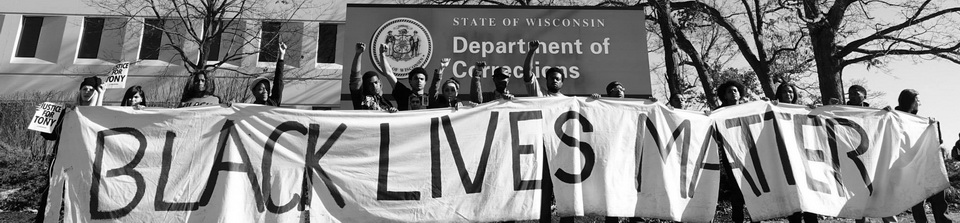
There are different calculations being made by the broad range of organizations and activists that make up the Black movement as a whole. After two years of mobilization around the phrase “Black Lives Matter” and the Ferguson protests, there was an intense protest phase in the summer of 2016. These mobilizations rekindled Black Power politics, put younger Black activists into dialog and confrontation with older Black activists, drew in White supporters, and gained institutional concessions. The movement sought to shift to a proactive rather than reactive stance and use its momentum to draw support for issues beyond policing. The Movement for Black Lives rolled out an ambitious and proactive social change agenda in August.
But even as it won victories, the Black Lives Matter mobilization increased the salience of racial identities. Counter- movements had mobilized, including “All Lives Matter” and “Blue Lives Matter” and there was even a revival of the 1960s John Birch Society’s “Support Your Local Police.” BLM was accused of fomenting attacks on police. The Trump campaign drew upon and fed these counter-movements. Already-intense police repression of Black protest increased post-election, with the FBI even calling “Black Identity” organizations terrorists, in an eerie echo of its stance toward the Civil Rights Movement. The Black Movement has not gone away, but has shifted strategy. Black activists were already planning for a possible Trump victory as early as September 2016 and have settled in to fight in this less favorable political climate. There will probably be fewer proactive protests, although there will still be reactive protests in response to police violence and local campaigns will continue. White ally groups have declined, shifting to other issues as the Trump administration takes aim on group after group.
If you are a Muslim, an immigrant, a DREAMER, a gay or trans person, or someone who wants to support them, the goal is to find ways to protect vulnerable minorities who have few legal protections. Popular demonstrative protests by members of the White cisgender heterosexual majority can demonstrate that stigmatized minorities are not alone, and certain kinds of mobilizations, such as the airport protests or Sanctuary movements or legal aid mobilizations, seek to provide direct assistance in protecting people. Mass protests by stigmatized minorities seem less likely, as all these groups are extremely vulnerable to repression and violent attacks and are already suffering losses.
For all of these groups and others, activists must always consider their strategic position, goals, power, resources, and relation to other groups in the field. They must anticipate the possible actions their fellow players will take, in the short and long term. Relatively spontaneous protests that arise in response to suddenly imposed grievances either work or do not in removing the immediate problem. For longer-term change, protest is generally not an end in itself, but a tactic used in conjunction with other tactics. Protests can draw media attention, can attract and motivate supporters, and can signal popular opinion, but protests can also alienate potential allies and draw repression. Strategic activists who want to win are also nimble: while continually adjusting their tactics in light of what all the other actors in the game have done, they shore up their team, reinforce alliances, and keep their goals in mind.
And should a social movement come out on top, its supporters and allies must keep up the fight. This game never really ends.


